
The journal: education
What Is a Liquidity Sweep? (And Why It Matters for Nasdaq Traders)
Most retail traders see a stop hunt and call it manipulation. Traders who understand market structure see the same move and call it the first gate of an entry setup.
That difference in perspective is what separates traders who wait for real confirmation from traders who get stopped out right before the real move begins.
Liquidity is the fuel of the LS Model: price moves to seek it, and sweeps are how that seeking looks on a chart. The levels you trade from form around liquidity, and every target is the next pool of it. If you can't read where liquidity sits, you can't read the model.
Here's why.
What Is Liquidity?
In leveraged markets, liquidity is where resting orders sit. Specifically:
- Buy stops cluster above swing highs, equal highs, and prior day highs
- Sell stops cluster below swing lows, equal lows, and prior day lows
These levels are visible on any chart. Retail traders place their stops there because it's "logical" — above resistance, below support. Price knows this because those stops exist as real orders in the book.
What Is a Sweep?
A liquidity sweep (also called a stop hunt or liquidity raid) happens when price briefly pushes beyond one of these cluster levels, triggering the resting orders, then reverses sharply in the opposite direction.
The mechanism:
- Price approaches a cluster of buy stops above a swing high
- Price pierces that level — triggering the buy stops as market orders
- The resulting long positions become the fuel for a short trade
- Large sellers fill into that liquidity; price reverses lower
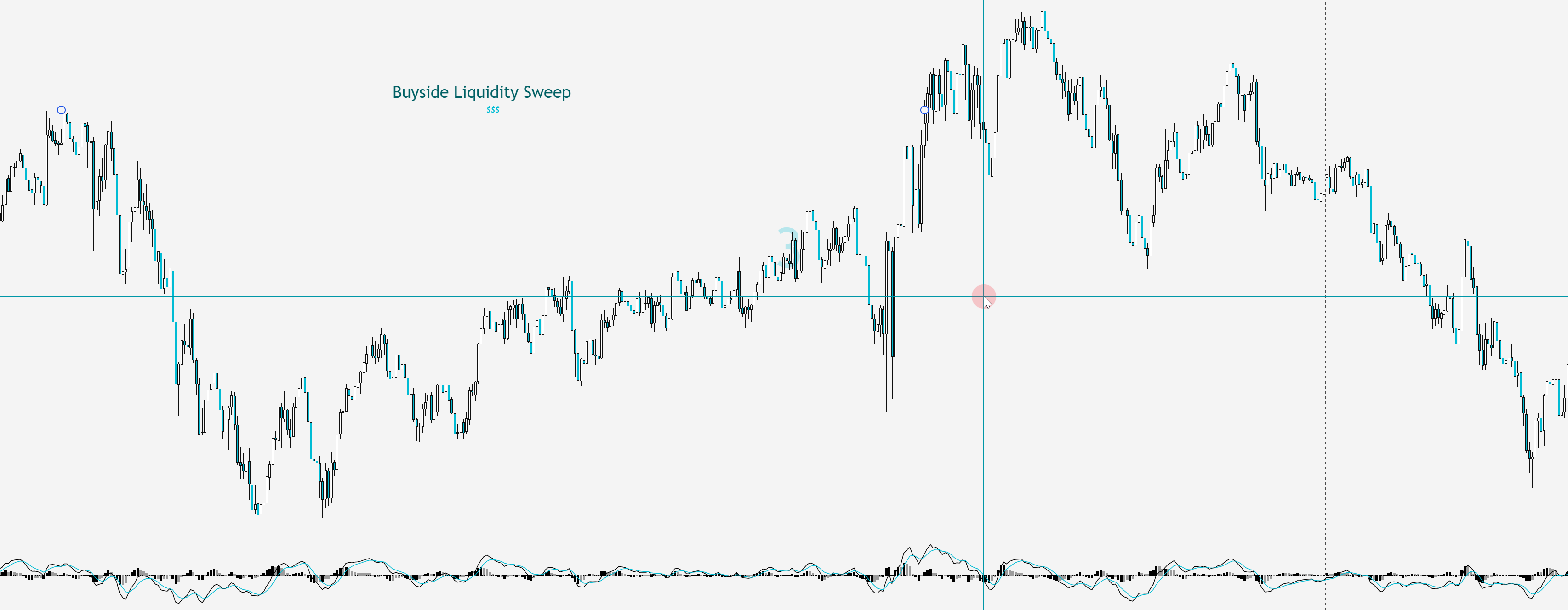
The sweep isn't random. It's the mechanism by which large orders fill without moving the market against the position being built.
Why Nasdaq Is the Ideal Instrument
Nasdaq is one of the cleanest instruments for sweep-based trading because:
- Deep liquidity pools: Technology stocks create predictable positioning around key levels
- Clear session structure: The NY AM session (9:30–11:00 AM ET) produces the majority of high-quality sweeps
- Tight spreads: Strong participation keeps bid-ask spreads manageable
- Defined key levels: Prior session highs/lows, overnight highs/lows, and opening range extremes create obvious liquidity targets
How the LS Model Uses Sweeps
A sweep alone isn't a setup. It's the first gate.
After a sweep is confirmed, the model switches to the 3m and looks for a rejection — price trades into a Fair Value Gap or level, shows rejection wicks or an engulfing candle, then closes beyond the recent high or low in the intended direction. That close is the trigger.
The combination of sweep + 3m rejection is the core entry mechanism. The Confluence Table is the checklist for that mechanism — every row must PASS for the setup to be valid.
This is what the trader is tracking in real time: which level got swept, whether the rejection formed, and whether every row in the Confluence Table reads PASS before the entry is taken.
What to Watch For
Next time you're watching Nasdaq, look for these before a potential sweep:
- Equal highs or equal lows: Price testing the same level twice creates a magnet
- Prior session extremes: Previous day high/low, overnight high/low
- Opening range extremes: The high and low established in the first 15 minutes of the NY session
- Trendline intersections: Retail traders cluster stops at these obvious points
When price raids one of these levels and immediately rejects, that's your cue: something may be setting up.
How the Model Tracks This
Reading Nasdaq this way means continuously tracking every mapped liquidity level and confirming sweeps as they happen. The Confluence Table is the checklist for that read — sweep confirmed, 3m rejection formed, structure break closed — so you follow the model's logic bar by bar, building the pattern recognition that makes you a better reader of price.
Ready to see live Nasdaq setups? Join the LSTrades community on Discord or see access options at /pricing.
Next: What Is a Fair Value Gap? — the entry structure the model looks for after the sweep.
Free: the NY-open checklist
Get the session-prep checklist I run before the New York open.
The exact pre-market routine: the 30m read, the level, the risk rules, the debrief. Plus The NQ Edge letter. No hype.
VIP signals are free with Exness
My trades and our bot's trades, in your Telegram.
Entry, stop, targets, and the management as it happens, losses included. Free with an Exness account under the partnership.