
The journal: education
The Continuation Entry: Trading With the Trend on Nasdaq
Of the LS Model's three entry types, the Continuation is the workhorse: it trades with an established trend instead of trying to call its end. It's also the entry with the highest reward floor — a Continuation needs at least 1:2, ideally 1:3, to be worth taking.
Here's the sequence, from the 30m down to the 3m.
Step 1 — Prove the trend on the 30m
The 30m is the top timeframe in the LS Model; there's nothing above it to overrule it. A trend exists when the 30m has printed two or more breaks of structure in the same direction over the past two to three trading days — and each break only counts if a candle body closed beyond the prior swing. A wick poking through proves nothing.
Mark the latest 30m structure break. That's the reference for the current leg.
If the 30m is mixed or ranging — breaks in both directions, no repeated follow-through — there is no Continuation trade. Stand down. This is the no-trade condition that protects everything downstream.
Step 2 — Mark the level
Within the trend leg, two kinds of levels qualify as an entry zone:
- An unmitigated fair value gap. The higher-probability gaps sit in the right half of the leg — the lower half (discount) in a bullish leg, the upper half (premium) in a bearish one. And a gap that forms after the swing signals momentum: price will often pull back into the gap rather than travel all the way back to the swing.
- The last swing before the break — measured from the candle bodies, not the extreme wick.
Either one alone is enough to act on.
Step 3 — Wait for the pullback, then drop to the 3m
Nothing happens until price trades back into the marked level. When it arrives, switch to the 3m and watch for rejection: rejection wicks, an engulfing candle — and then the part that actually matters, a 3m body close beyond the recent high or low in your direction. No close, no trigger, no trade.
For a bullish Continuation specifically: the 3m prints a Lower High, then a Higher Low, and the entry is the candle that breaks above the bodies of that last Lower High.
Step 4 — Stop, target, management
- Stop: the developing 3m structure — not a fixed point count.
- Target: the next opposing pool of liquidity. The 1:2 floor (ideally 1:3) is a filter, not the destination — if the next liquidity doesn't clear it, skip the trade.
- Management: breakeven at 1:1, trail the developing 3m structure, exit once and in full at the target. The reasoning is covered in the exit structure post.
A practical example
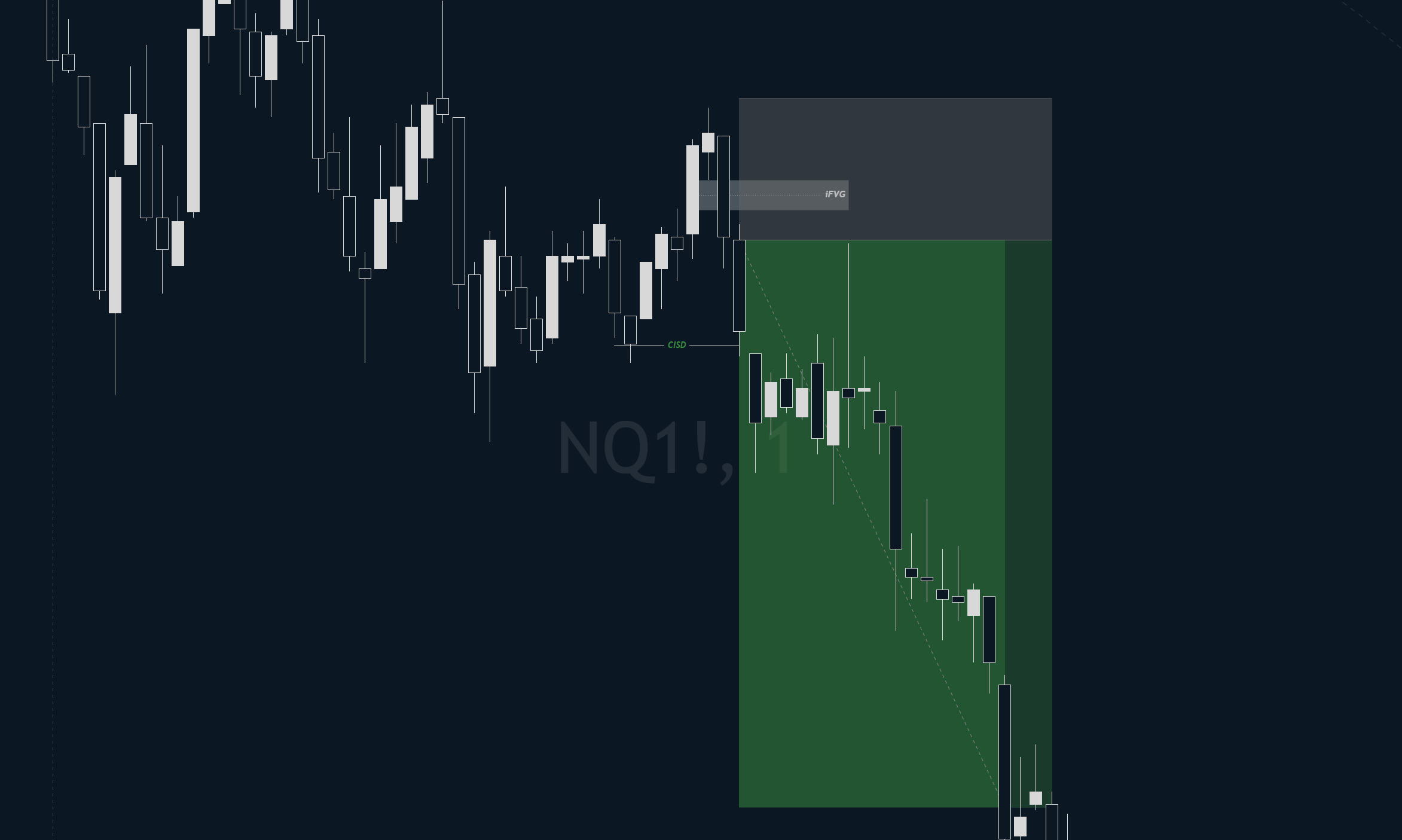
A bullish session might unfold like this:
- Pre-market — The 30m shows two clean upside breaks since Tuesday, both confirmed by body closes. The latest break is marked. An unmitigated FVG sits in the lower half of the leg.
- 9:40 AM — Price retraces into the gap. Chart drops to the 3m.
- 9:50 AM — Rejection wicks form inside the gap. The 3m prints a Lower High, then a Higher Low.
- 9:55 AM — A 3m candle breaks above the bodies of that Lower High. That's the entry. Stop under the developing structure, target at the liquidity above, 1:2 minimum confirmed before entry.
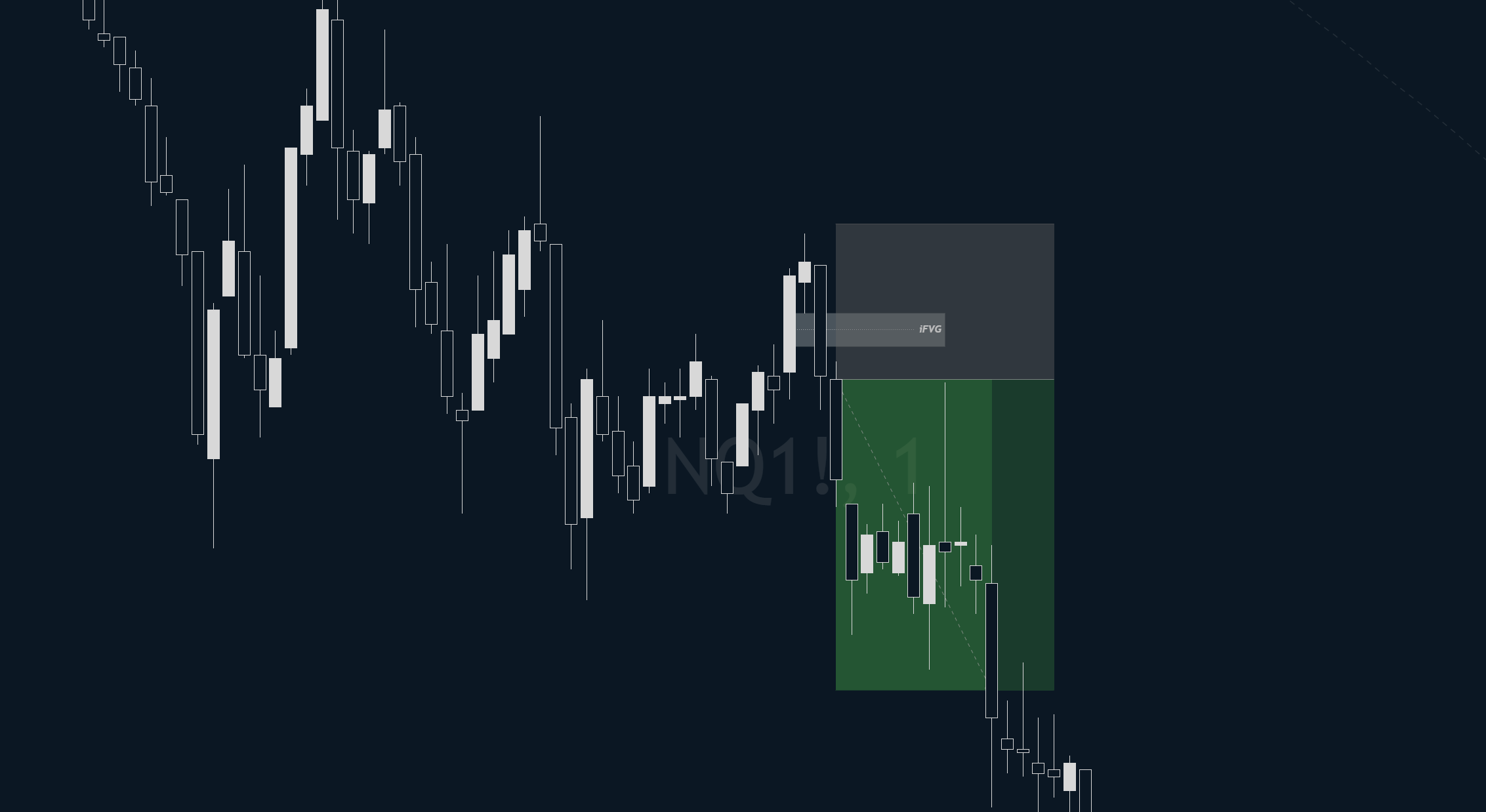
The gate still applies
The Continuation runs through the same binary confluence gate as every LS Model entry — session window, trend, level, trigger, plan. Every row passes or there is no trade. How that works: The Confluence Gate — Why We Don't Grade Setups.
And the session rules hold regardless of entry type: maximum two trades per NY session, stand down around the 10:00 AM news window, stop for the day after two losses.
Where it sits among the three entries
- Continuation — with the 30m trend, pullback into the level, 3m trigger. Floor 1:2, ideally 1:3.
- Bias Flip — price runs through the levels and builds structure against the old direction; entry off the closest remaining FVG. Capped at 1:2.
- Opening Drive — price opens and rips; first 3m FVG, tap and reject into a BOS, fast 1:1.
The Continuation is the one you'll see most often in The Debrief — because most days, the market isn't reversing. It's continuing.
Related: What Is a Break of Structure? explains the 30m confirmation that gates this entry. What Is a Fair Value Gap? covers the level itself. Or join the free Discord and watch the next one develop live.
Free: the NY-open checklist
Get the session-prep checklist I run before the New York open.
The exact pre-market routine: the 30m read, the level, the risk rules, the debrief. Plus The NQ Edge letter. No hype.
VIP signals are free with Exness
My trades and our bot's trades, in your Telegram.
Entry, stop, targets, and the management as it happens, losses included. Free with an Exness account under the partnership.