
The journal: education
What Is a Bias Flip? The LS Model Entry, Explained
Most of the time the LS Model trades with the trend: price pulls back into a level, rejects, and resumes. But sometimes price runs straight through every level you marked and refuses to turn. That refusal is information. When it starts building structure against the original move, the bias has flipped — and the model has a specific way to enter the new direction.
Here's what a bias flip is and how you confirm one.
First, the entry the model uses most
Before the flip, understand the base entry, because the bias flip is a variation on it.
You mark your trend on the 30m and your levels on the 30m (an FVG, or the last swing before the break of structure). Then you wait for price to pull back into a level. Once it arrives, you drop to the 3m and look for a rejection.
A rejection on the 3m is three things in order:
- Price trades into the level.
- The candles reject it — rejection wicks, an engulfing candle, that kind of pressure.
- A candle body closes beyond the recent high or low in your intended direction.
That close is the confirmation. No close, no rejection, no trade. A wick poking out is not enough — the body has to commit.
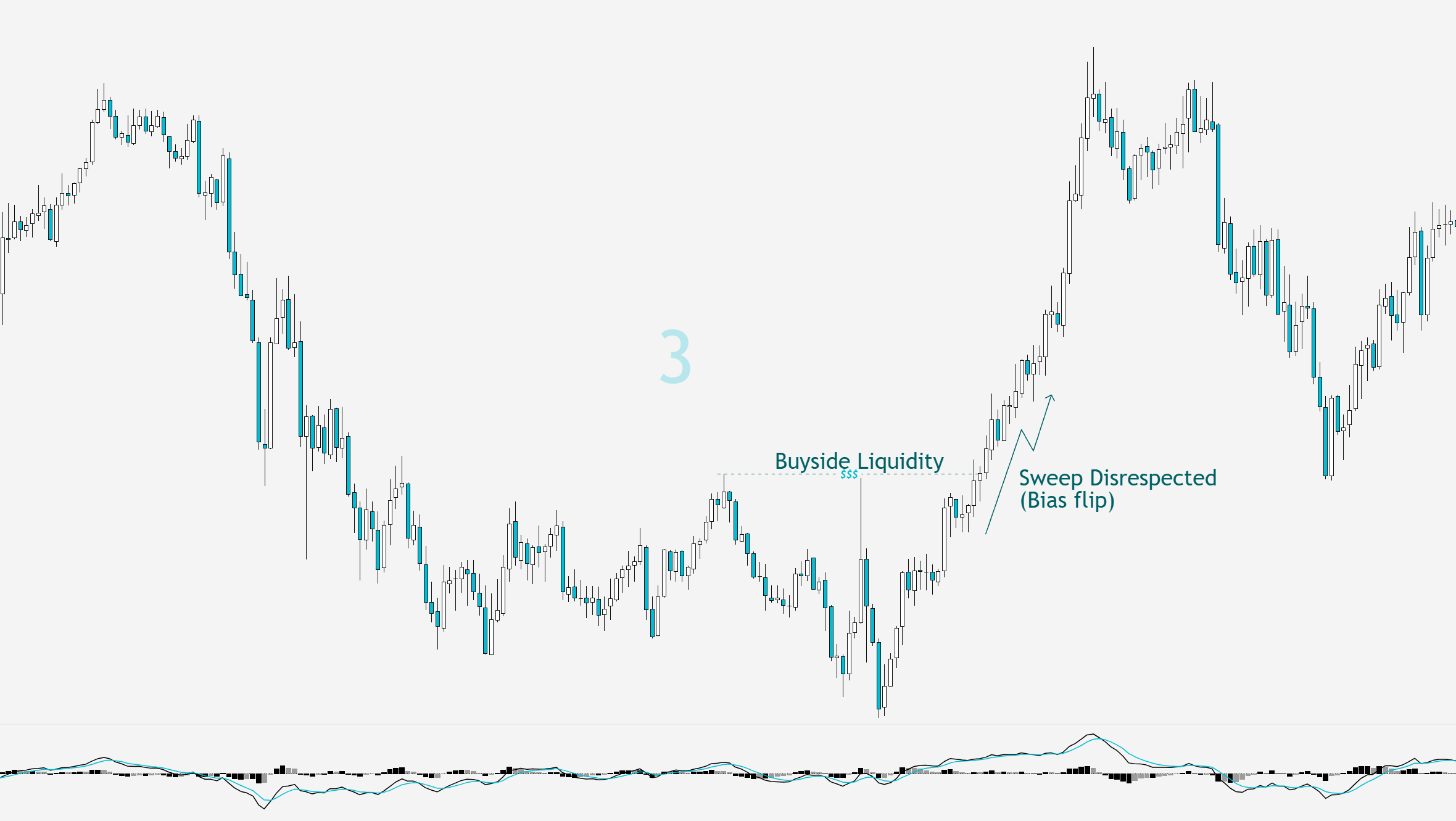
What a bias flip actually is
A bias flip is when price runs through your level instead of respecting it, then starts building structure in the opposite direction to the move that created the level.
Two things both have to be true:
- On the 3m, price has run through all of your marked levels.
- Price is now building structure against the initial move.
The structure tells you which way it flipped:
- Bull-to-bear flip: price made a Lower High (LH), then instead of holding and pushing up, it went on to make a Lower Low (LL).
- Bear-to-bull flip: price made a Higher Low (HL), then instead of holding, it went on to make a Higher High (HH).
That first counter-trend break of structure is the warning — a ChoCh (change of character). It's the model's signal that the prior direction may be done.
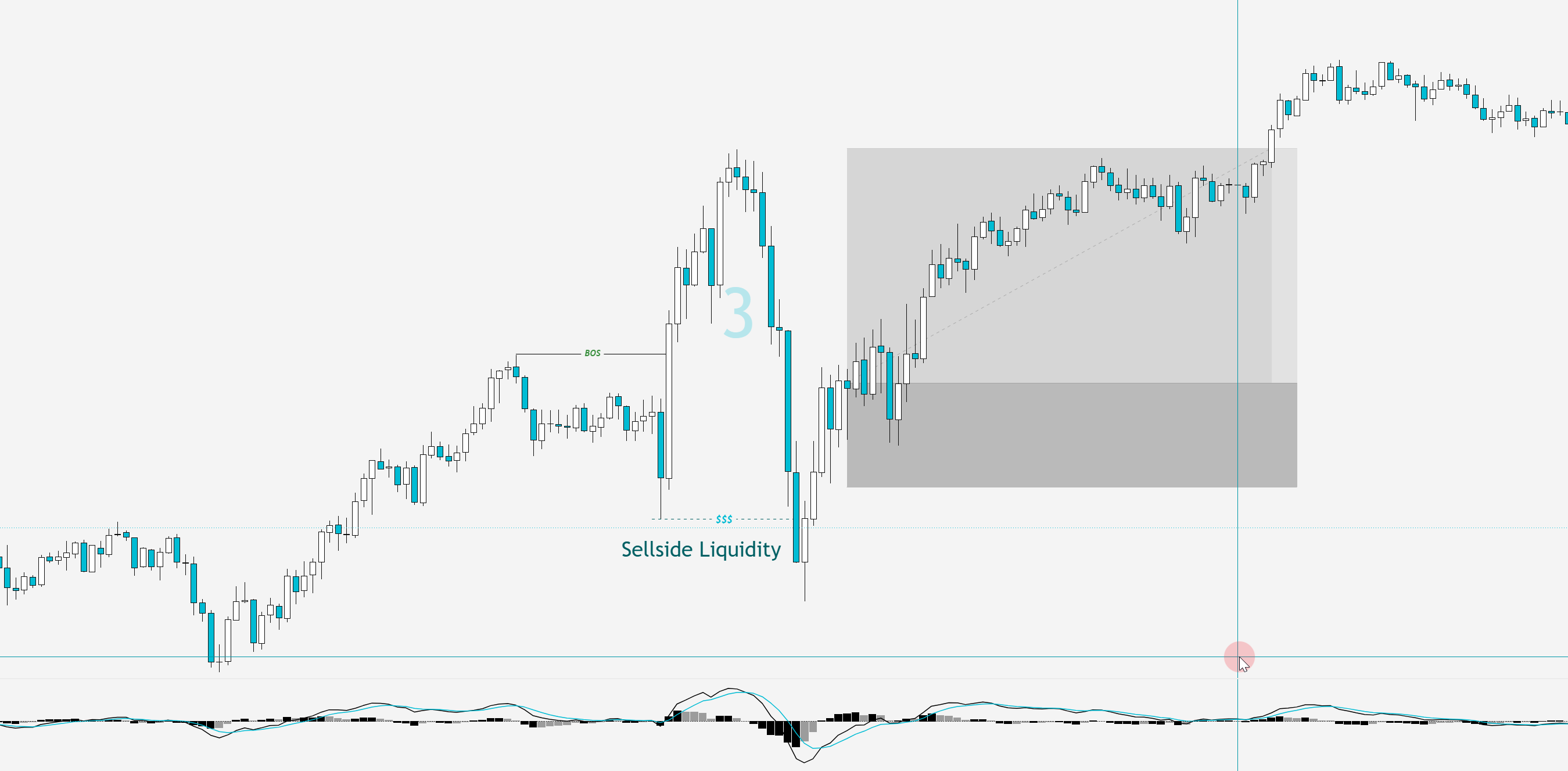
How you enter the flip
You don't chase the flip on the break. You wait for price to come back to the nearest remaining FVG along the new move, then you treat it exactly like the base entry:
- Look for a rejection out of that closest remaining FVG.
- Wait for a break of structure — a body close confirming the new direction.
- Enter on that candle's close.
Stop goes on the developing 3m structure. Because flips are counter to the move that just happened, they're capped tighter on reward — target a maximum of 1:2 RR and take the full exit at the liquidity target. No partials.
The one thing to take away
A level being broken is not a failure of your read — it's the next read. When price runs through a level and builds an opposing LH-then-LL (or HL-then-HH), don't fight it; wait for the rejection out of the nearest remaining FVG, take the BOS close, and trade the flip. The market told you where it's going.
Where this fits
The bias flip is the entry trigger. The level it triggers against is a Fair Value Gap or a swing — if you're shaky on what an FVG is and why it matters, read What Is a Fair Value Gap?. And the move that sets the whole thing up usually starts with price raiding a level: What Is a Liquidity Sweep? covers that.
Lewis trades the New York session live, in public, on YouTube and TikTok. Learning the LS Model? Start free with the public sessions and the sheets. The full course library is in The Debrief Plus.
Educational only. This is not financial advice. Trading leveraged instruments carries substantial risk, and past results don't guarantee future ones. The LS Model is a methodology. VIP alerts are free with an Exness account; you place each trade yourself. No Exness where you are? VIP comes included with The Debrief Plus or LSTrades Copy. Join the free Discord community to learn it alongside other traders.
Free: the NY-open checklist
Get the session-prep checklist I run before the New York open.
The exact pre-market routine: the 30m read, the level, the risk rules, the debrief. Plus The NQ Edge letter. No hype.
VIP signals are free with Exness
My trades and our bot's trades, in your Telegram.
Entry, stop, targets, and the management as it happens, losses included. Free with an Exness account under the partnership.